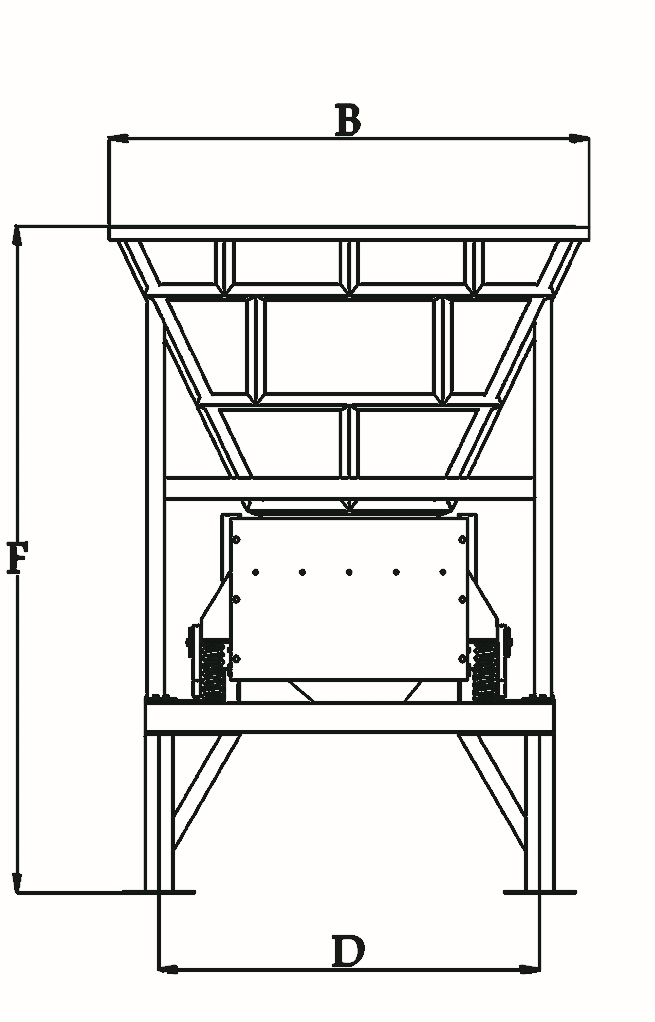
Selection of Size
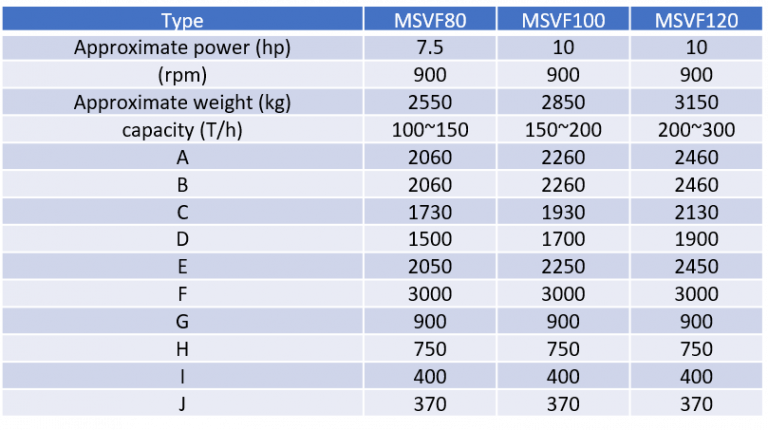
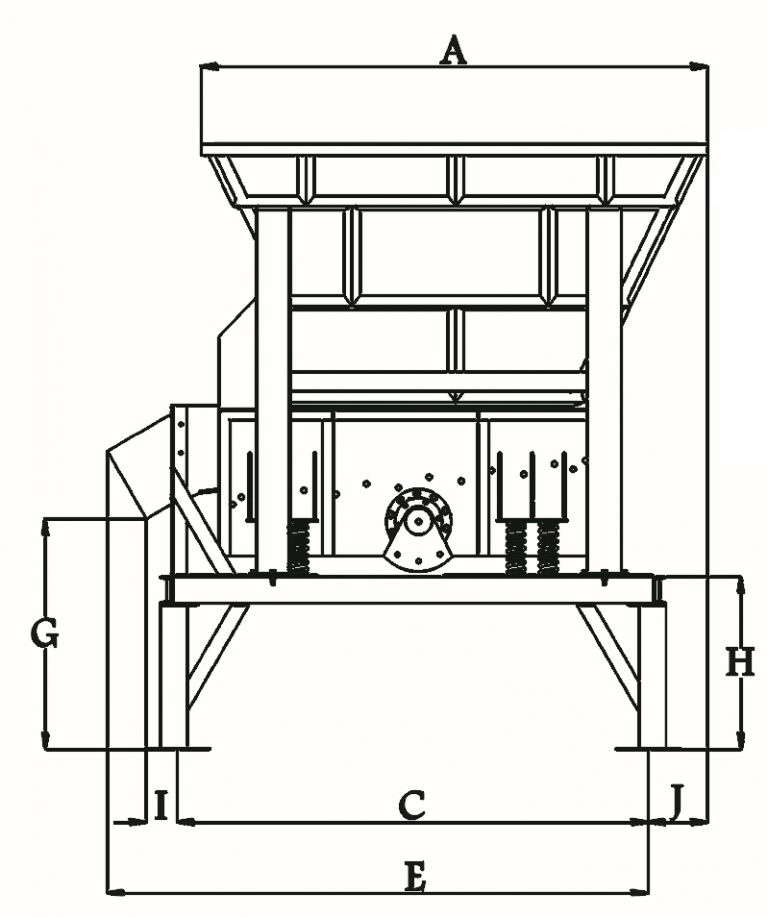
The selection of a suitable size of feeder is governed by the desired capacity, the lump size of the material, and the feed opening of the following crusher . Our standard feeders are listed in the table below. We can also supply other sizes for special purposes.
Operation
The feeding motion is generated by a vibrator mechanism which gives a linear , upwardly inclined stroke. The vibrator is driven by an electric motor. The feeder can also be equipped with a hydraulic drive system or a speed variator , thus permitting stepless feed regulation.
Installation
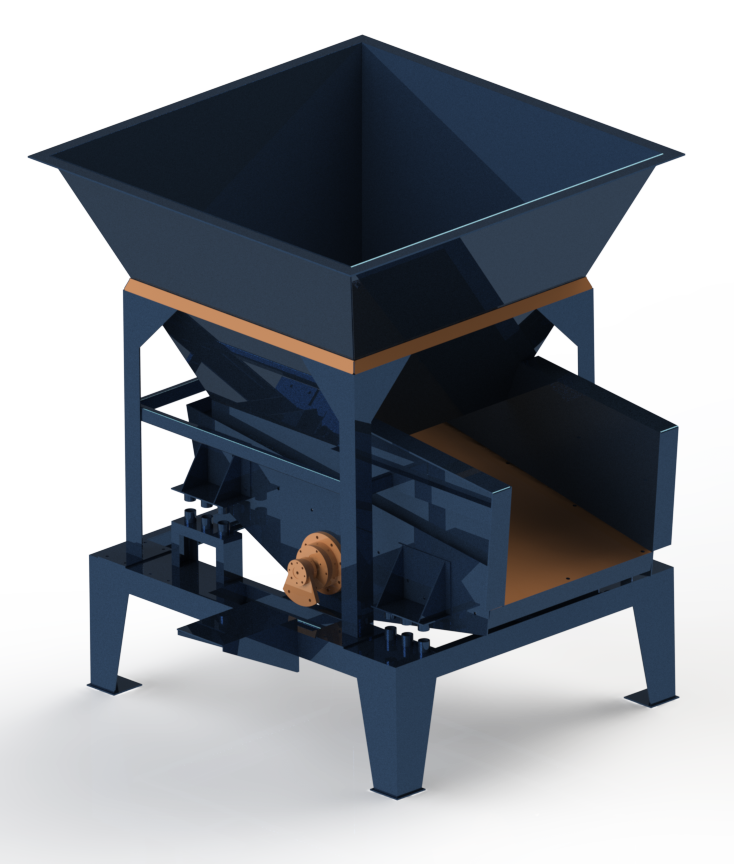
The feeder is supported by springs attached to a mounting frame.The springs are fitted in cassettes which permit ea sy spring replacement in the event of a breakage.
Design
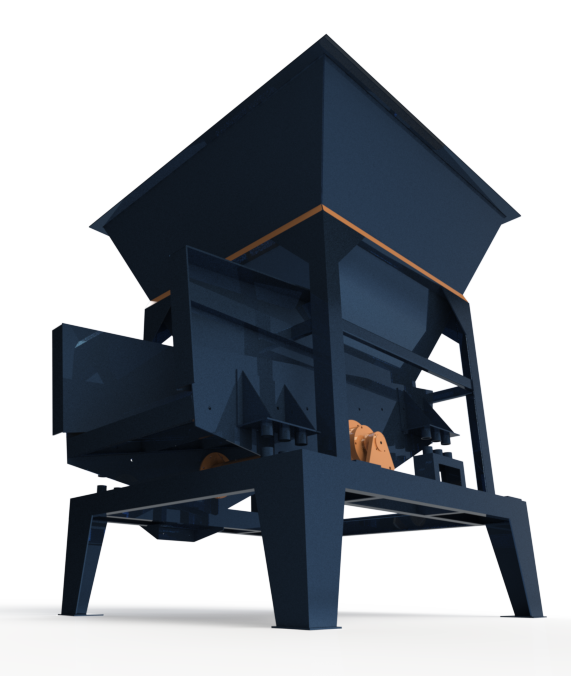
Feeder body of very robust construction. It is built up of plate and steel profiles , lined with replaceable wearing plates. The standard feeder has an inclined grizzly bar section at the discharge end to permit the separation of undersize material. The grizzly bars have replaceable wearing elements and can be supplied for different separation sizes. The feeder is also available with two grizzly sections in a stepped configuration and can be fitted with a second deck for the removal of natural fines. In addition, the feeder can be supplied with a plain bottom -i.e. without a grizzly section.
Vibrator mechanism
Built into the feeder body, with two unbalanced shafts running in spherical roller bearings mounted on the sides of the body. The shafts are synchronized by a free standing gearbox and rotate in opposite directions. The feeder’s stroke is altered by increasing or decreasing the number of unbalance weights on the vibrator shaft bearings whilst the synchronizing gears run in an oilbath.